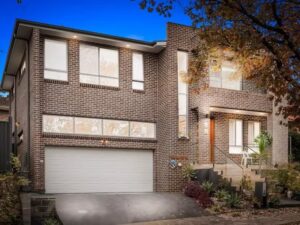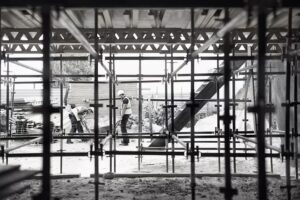

Building a new home in 2026 is a once-in-a-generation opportunity to get the technology infrastructure right from the start. Unlike older homes where smart technology has to be awkwardly retrofitted, a new build lets you plan every cable run, every control point, and every system integration before a single slab is poured. Get it right at the planning stage and your home will be genuinely smarter, more efficient, and more enjoyable to live in for decades. Get it wrong — or leave it too late — and you’ll be chasing walls and pulling up floors trying to add things that should have been included from day one.
Start with Structured Cabling
Before any of the exciting technology decisions, structured cabling is the unglamorous but absolutely essential foundation. This means running CAT6A ethernet cable to every room in the house — not just the study, but bedrooms, living areas, the alfresco, and the garage. Wi-Fi has improved dramatically, but a hardwired ethernet connection will always outperform wireless for speed, reliability, and latency. The cost of running cable during construction is minimal; the cost of adding it after the walls are closed is significant.
A central communications cabinet — a dedicated cupboard or enclosure where all cabling terminates — keeps the system organised and serviceable for the life of the home.
Home Automation: Lighting, Blinds, and Climate
Centralised home automation systems from brands like Control4, Lutron, Crestron, and KNX allow you to manage lighting, motorised blinds, air conditioning, and other systems from a single app, voice command, or wall panel. In a custom new build, these systems are best installed as part of the original electrical fit-out rather than retrofitted later.
At a minimum, consider installing dimmer-compatible wiring to all lighting circuits (even if you don’t install dimmers immediately), pre-wiring for motorised roller blinds in living areas and bedrooms, and a home automation hub location in your communications cabinet. These provisions cost very little at build time but give you enormous flexibility to add automation gradually as your budget allows.
Solar, Battery, and Energy Management
Solar panels with battery storage are now a standard inclusion in new builds across the Hills District and Hawkesbury. But the real intelligence is in how the system is managed. Whole-home energy management platforms — such as those offered by SolarEdge, Fronius, or Tesla with their Powerwall — can automatically optimise when you draw from the grid, when you charge your battery, and when you export excess energy. Some systems can even pre-charge batteries from the grid overnight at off-peak rates when solar generation will be low the next day.
Including an EV charging circuit — typically a 32A single-phase or 3-phase circuit to the garage — is a straightforward addition at build time that future-proofs your home for the inevitable transition to electric vehicles.
Security and Access Control
Modern home security has moved well beyond the alarm box on the wall. New builds in 2026 are routinely incorporating video doorbells with two-way communication, CCTV systems with local and cloud recording, smart locks on entry doors that can be controlled remotely or by keypad or fingerprint, and automated gate systems for properties with driveways. All of these require careful planning of cable runs, power points, and network connections during construction.
Whole-Home Audio and Entertainment
Multi-room audio systems — where music plays throughout the house from a single source, controlled by app or voice — require speaker cables to be run in walls and ceilings before plastering. The cost of the cable is negligible; the cost of the planning is time, not money. Similarly, pre-wiring TV and projector points in living rooms, bedrooms, and outdoor areas before walls are closed gives you flexibility to add screens without unsightly surface cabling later.
The Key Rule: Plan Early, Install Progressively
The golden rule of smart home technology in a new build is to plan the infrastructure comprehensively from the start, even if you don’t install all the technology immediately. Cabling is cheap; retrospective work is expensive. Your builder and an AV/automation consultant can work together to produce a technology plan during the design stage — before the electrician starts work — that ensures every cable, conduit, and power point is exactly where it needs to be.
At Ozzie Dream Homes, we help our clients think through their technology requirements as part of the design process, so nothing important is left out. Talk to our team about building a home that’s genuinely ready for the way you’ll live in it.